How to Choose Good Extra Virgin Olive Oil in Australia
A practical guide to buying good extra virgin olive oil in Australia: what the label really tells you, why harvest date beats best before, and how to spot value.
Buying good extra virgin olive oil comes down to three things: freshness, grade, and how it was made. Get those right and you will drink far better oil for the same money. The single best move in Australia is to buy fresh, certified local oil with a harvest date on the label. Because Australian olives are pressed in autumn, opposite the northern hemisphere, a local bottle usually reaches the shelf months fresher than an import.
This is the hub for choosing a bottle. Below is the short version. Each point links to a full guide.
Start with the grade
Extra virgin is the top grade. It is made by mechanical means only, with no heat or solvents, and it has to pass both a chemistry test and a taste test with no defects. Everything else on the shelf sits below it: virgin, refined, “pure”, “light” and pomace oils are either lower grade or chemically refined.
If the label does not clearly say “extra virgin”, assume it is not. Words like “pure”, “light” and “classic” are refined oils dressed up. For the full ladder, see extra virgin vs virgin vs refined, and if you want the definition in plain terms, start with what extra virgin olive oil actually is.
Then look for a harvest date
Olive oil is a fresh fruit juice. It does not improve with age, and both flavour and the health-linked antioxidants fade over the months after pressing. A best before date can sit two years out and tell you nothing about when the fruit was picked.
Look for a harvest or pressing date instead. Australian oil carries one from the same year’s autumn harvest, so you can buy oil that is only a few months old. That is the whole freshness advantage in one line, and it is covered in why the harvest date matters.
Buy certified where you can
The Australian Olive Association runs a voluntary certification with a trust mark backed by chemical and sensory testing. Certified oil has been checked against the Australian standard AS 5264, which is one of the strictest in the world. Certification is your shortcut past the mislabelling that has dogged the imported end of the market.
Read the rest of the label
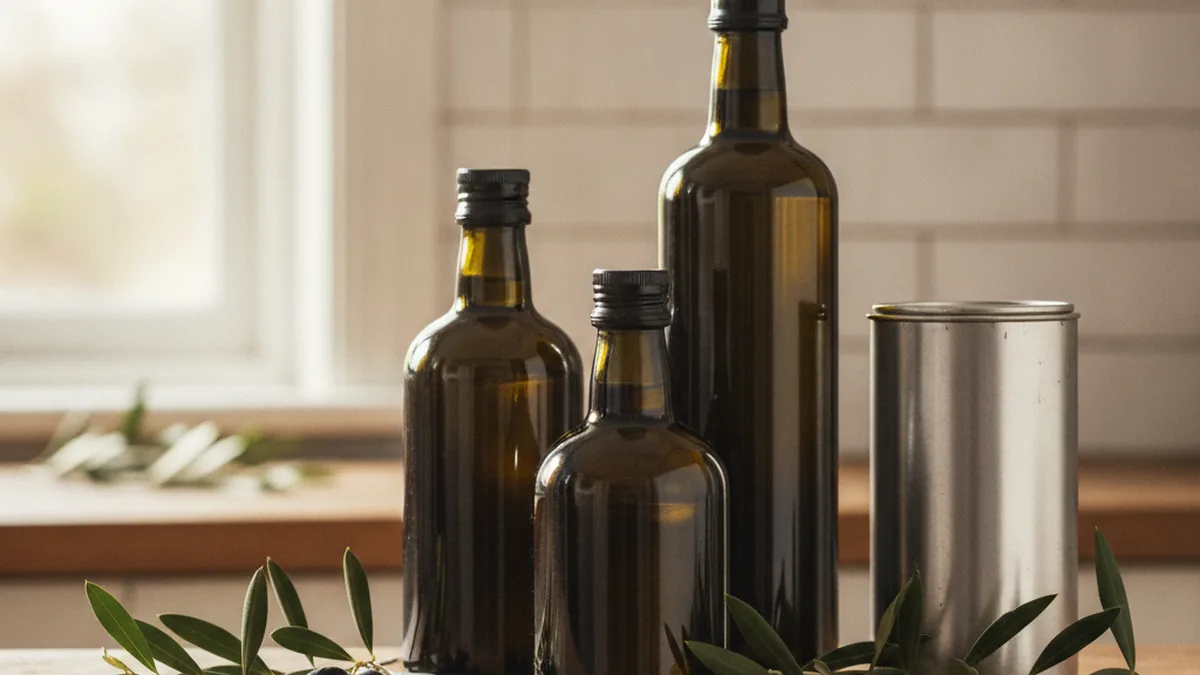
A good label tells you the variety or blend, the region, the harvest date, and often the free fatty acid figure (lower is fresher; extra virgin sits at or below 0.8%). Dark glass or a tin is a good sign, because light is one of oil’s main enemies. Our full walk-through is how to read an olive oil label.
Match the oil to the job
- Everyday cooking: a fresh, mid-priced Australian extra virgin. It handles the heat of frying and roasting fine.
- Finishing and salads: a fresher, more peppery single varietal like Coratina or Frantoio, used raw so you taste it.
- Mild palates: a softer, buttery style such as Arbequina.
You do not need a different oil for every task, but keeping one everyday bottle and one better finishing bottle is a sensible split.
What about price?
Real extra virgin costs more than seed oils because it is a harvested, pressed fruit product with a short season. The cheapest bottles are usually old, imported blends. You do not need the dearest oil on the shelf, but the very cheapest “extra virgin” is a false economy. See what you actually pay for for how to get value.
A simple buying checklist
- It clearly says extra virgin.
- It has a harvest date, ideally within the last year.
- It is Australian and, better still, certified.
- It is in dark glass or a tin, not clear plastic.
- The price is sensible for a real food product, not rock bottom.
Once the bottle is home, store it well and use it within a few months of opening. The rest of this site fills in the detail: the varieties behind the flavour, the regions that grow them, how the oil is made, and how to taste it so you can judge a bottle for yourself.
Explore Choosing
Certified Extra Virgin: What the Australian Trust Mark Means
Certified extra virgin olive oil is lab tested for chemistry and taste. Here is what the Australian Olive Association trust mark means and why it matters.
How to Find the Best Olive Oil in Australia
How to find the best extra virgin olive oil in Australia: what actually signals quality, why fresh certified local oil wins, and how to judge a bottle yourself.
How to Read an Olive Oil Label
Read an olive oil label the smart way: find the words extra virgin, a harvest date, real origin and certification, and ignore the marketing noise.
How to Store Olive Oil
Store olive oil cool, dark and sealed to keep it fresh. Learn where to keep it, whether to refrigerate, and how long it lasts once opened.
Olive Oil Fraud and Why Some 'Extra Virgin' Isn't
Olive oil fraud and mislabelling are old problems. Learn how oils fail the extra virgin grade and why certified Australian oil sidesteps most of the risk.
What Is Extra Virgin Olive Oil?
Extra virgin olive oil, explained plainly: what makes it the top grade, how it differs from other olive oils, and why freshness and no heat or solvents matter.
What You Actually Pay For in a Bottle of Olive Oil
Why real extra virgin olive oil costs more than cheap blends, what drives the price, and how to get genuine value without buying the cheapest bottle.
Why the Olive Oil Harvest Date Matters
The harvest date tells you how fresh your olive oil really is. Learn why it beats a best-before date and how to read it on an Australian bottle.